 WeChat:



You Are Here:Home > Information dynamics
> Industry dynamics
NEWS CENTER
Recommended news
- What Display and Storage Working Conditions for Liquor Stores Can Wine Racks Be Applied To?
- Snack Store Customer Flow Planning: What Merchandising Challenges Can Central Aisle Shelving for Pac
- Custom display racks for offline new product launch, suitable for various merchandise display scenar
- Island Display Rack for Snack Foods, Double-sided Commercial Merchandising Unit for Store Center in
- Convenience Store Display Shelves, Storage Equipment for Snacks & Beverages in Chain Retail Stores
Recommended products
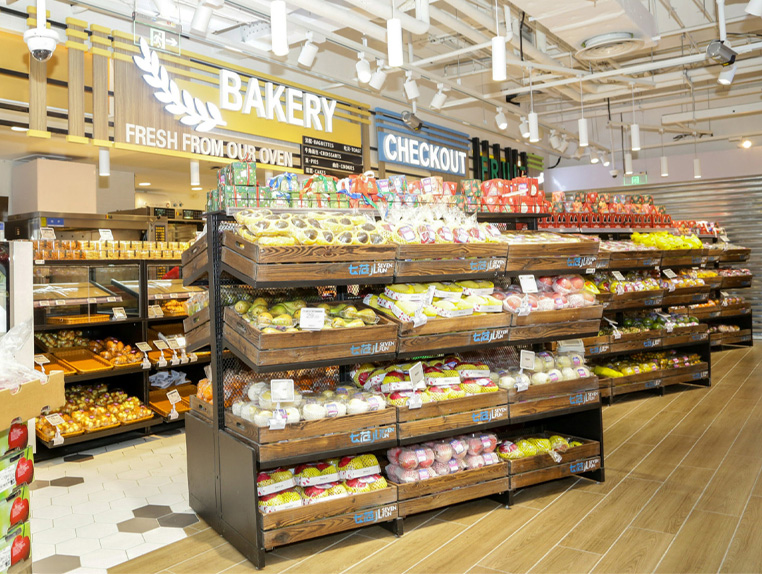
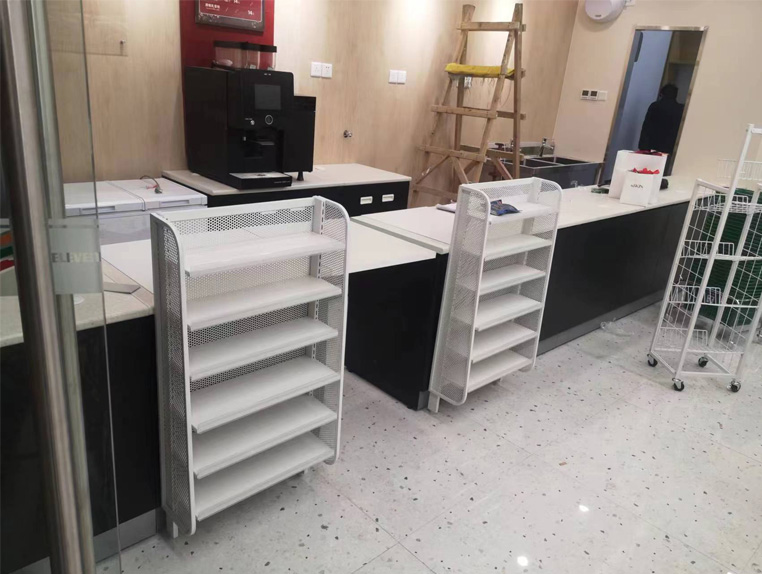

Custom display racks for offline new product launch, suitable for various merchandise display scenar
source:www.hanming.net.cn | Release time:2026-11-04
Offline new product promotion relies on display carriers to present products directly to visitors. The structure, size and shape design of display racks directly affect on-site layout and merchandise arrangement. Custom display racks are structurally developed according to project requirements. Their shape and load-bearing structure can be adjusted based on product profiles and site space to fit a wide range of offline new product display scenarios, supporting both short-term events and long-term in-store merchandising.
For new product display in mall counters, indoor space is segmented and the display area is limited. Custom display racks can be profiled to fit available counter dimensions. The spacing of layered shelves can be adjusted according to product heights to hold goods of varying sizes. Frame color and appearance can be customized to match promotion themes and blend with the counter environment. Cable routing channels are reserved inside the rack for optional lighting assemblies that illuminate displayed goods and enhance visual presentation. Built-in storage compartments hold spare products and promotional materials to reduce frequent restocking trips.
For new product presentations at industry exhibitions, booth rental periods are short with tight setup and teardown schedules. Custom display racks adopt modular split structures. Individual components are packed separately to save transport volume. Assembly requires no complex tools and can be finished quickly on site. Mounting positions for posters and signage are reserved for product introduction materials. The structure is engineered for repeated disassembly and assembly, enabling reuse across multiple exhibitions and cutting recurring event material costs. Frame weight is controlled for easy movement within exhibition halls and adapts to booths of different sizes.
For new product rollout in chain stores, aisle space is narrow with heavy foot traffic. Custom display racks feature stable support frames. Placed in store atriums or against walls, they resist tipping. Shelf load capacity is designed according to product weight, suitable for packaged goods, compact equipment and daily consumer goods. Small guards and label card slots can be added to separate different product lines, helping shoppers quickly identify product categories. Uniform rack specifications can be adopted for simultaneous rollout across multiple stores to maintain consistent terminal presentation.
For outdoor pop-up promotion events, site conditions are variable with wind and dust exposure. Counterweight mounting positions can be added at the base of custom display racks to boost stability and reduce shaking caused by outdoor airflow. Surface coatings improve dirt resistance; dust can be easily wiped off. Deformation-resistant materials are used for components. Paired with leveling foot pads to compensate for uneven ground, the racks fit plazas and open industrial lots for new product experience and sample display.
For new product showcases in enterprise factory exhibition halls, the racks display self-developed products and samples for client visits. Custom display racks use differentiated structures based on exhibit weight: reinforced frames for heavy exhibits and multi-compartment layouts for small samples. Spaces are reserved for nameplates and product descriptions. Styles can be matched to showroom decoration, with fixed or mobile options for easy product replacement and layout adjustment.
Materials including metal, wood panels and acrylic can be freely combined according to product shapes. Schemes are optimized for load bearing, assembly and appearance during production. A trial assembly test is conducted after component fabrication to verify fitting and prevent assembly issues on site.
Functional requirements for display racks vary across promotion scenarios. Short one-off events prioritize fast assembly and disassembly, while permanent retail displays focus on structural durability and simple maintenance. Accessory kits are available for component replacement to extend service life. The full workflow, from design consultation and structural drawing to manufacturing and shipment, aligns with new product promotion timelines to ensure on-time delivery for offline campaigns.
Consultation hotline0512-52436990

- Product series
- Storage shelves
- Supermarket shelves
- Scenario display
- Supermarket shelves
- Cashier
- Wall shelf
- product display
- other parts
- product display
- Kitchen supplies
- Cleaning supplies
- Fruit and vegetable food
- Maternal and Child Home Furnishings
- About Us
- Website homepage
- About Us
- Contact Us
- News Center
- MESSAGE
 home
 WeChat
 telephone